Pick 01
Broadcom
Part: Wi-Fi 6E and Bluetooth combo chip
- Patent strength
- High
- Patents
- 1,200+ patents
- Revenue
- ~$80M Vision Pro revenue
- Location
- US · Low risk
“Leader in wireless chips with a close working relationship with Apple.”
One Clay table that works as both an investment idea and a sales outreach engine. Research and action in one place. This is what a modern GTM setup looks like.
iFixit teardowns, Apple's 2024 Supplier List, Counterpoint parts analysis, patent databases, company filings, and analyst reports. All pulled into one auto-running flow.
A focused stock list mapped to the suppliers most exposed to Vision Pro volume, ranked on financials, cost position, and revenue mix. Not just buying Apple stock.
60 verified decision-makers, full contact info, and personalized messages. All generated automatically from each supplier row.
This is what GTM Engineering and Strategy means: building systems that combine data, research, and sales outreach into one flow. Clay is the tool that lets all three live in the same place.
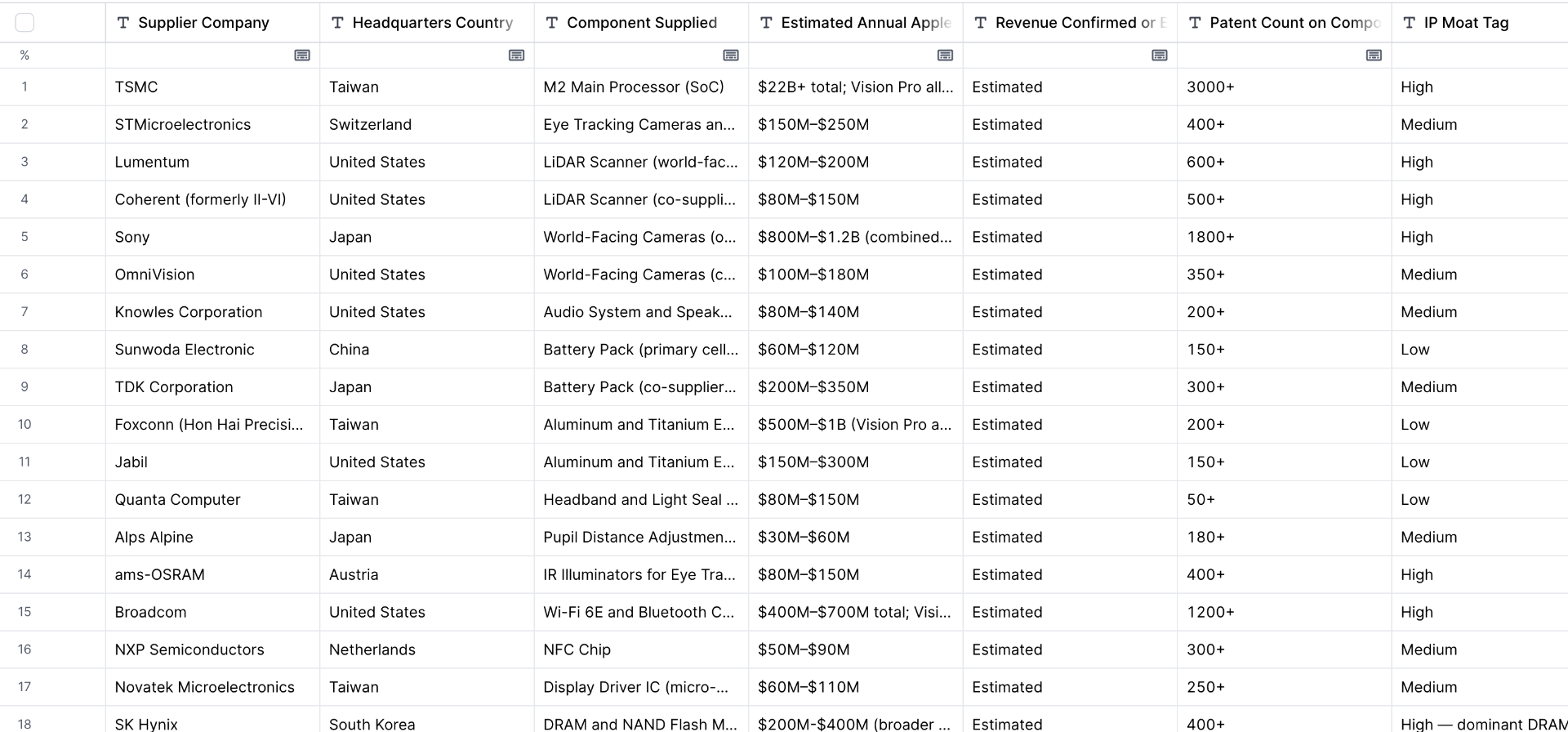
SEC and investor filings, teardowns, supplier lists, parts analyses, and patent databases are checked in order until every cell has an answer.
Patent Strength and Risk of Being Replaced are written by AI columns. Claygent handles open-web research for every row.
Auto-run keeps the table filling on its own. A final AI column writes a custom message using each supplier's part and Apple history.
Every supplier row is built by a five-step agent pipeline. A name goes in, a fully enriched record and a personalized outreach message come out - unattended.
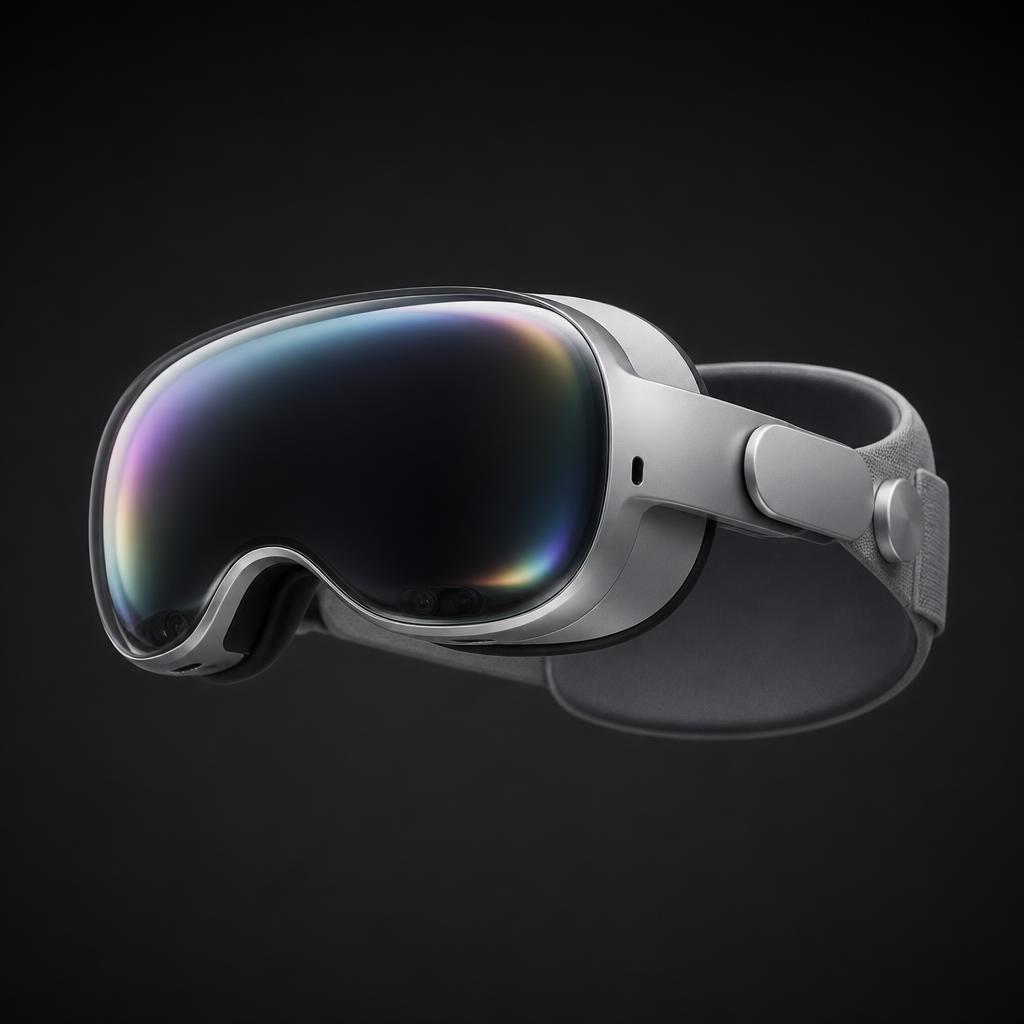
Apple Vision Pro is the first real spatial computing product people can buy. I screened the supply base on 46 fields per company across financials, cost position, and revenue mix, and ranked the suppliers whose growth is most levered to Vision Pro volume: high Apple revenue concentration, defensible part economics, and low replacement risk. This is a focused stock list, not just buying Apple.
Estimated yearly Apple revenue, revenue mix concentration, and how much of the company's growth rides on the Apple relationship.
Estimated part cost and unit economics: where the supplier sits in the Vision Pro parts list and how defensible its pricing is.
Apple's share of supplier revenue, years supplying Apple, and confirmation on Apple's official Supplier List.
Low, Medium, High, or Very High. Based on patent count and how unique the part design is.
Dollar range tied to Vision Pro specifically, and the supplier's revenue mix: how much of its business rides on Apple.
How concentrated the supplier is and how exposed they are to political risk.
Important for big investors and ESG-focused portfolios.
How likely the part is to be swapped out for future Apple chips or a rival platform, driven by unit cost and design lock-in.
Part: Wi-Fi 6E and Bluetooth combo chip
“Leader in wireless chips with a close working relationship with Apple.”
Part: Power management chips and Battery Management System
“Largest analog chip portfolio in the industry. Very hard to replace in power design.”
Part: Antenna modules and small RF parts
“Largest patent portfolio in the world for MLCC and RF filters.”
Part: Camera lens assemblies. Main supplier for all Vision Pro cameras
“Apple's sole precision lens supplier for more than ten years.”
Part: Apple-custom audio chips
“Built into Apple's custom audio roadmap. Revenue is almost locked in.”
On top of the research, I built a full B2B outreach layer aimed at decision-makers at each supplier. For each of the 60 suppliers, Clay finds the right contact (a VP or Director in supply chain, partnerships, or BD), their work email, LinkedIn, and time in role. Then it writes a personalized message using the supplier's part, Apple history, and patent position.
Hi, given Largan's role as Apple's sole precision lens supplier and the camera assemblies confirmed in the Vision Pro teardown, I'd love to compare notes on how the parts share might change as Apple builds the next headset. Have 15 minutes next week?
One system, two outputs. The research and the outreach share a row.
I built this as a single source of truth: one Clay table feeds both the investment analysis and the outreach pipeline. Auto-run keeps it filling on its own, so the data gets better over time without me touching it. This is what a modern GTM setup looks like.
Personal estimate: manually sourcing 60 suppliers with the same 46 data points would take me roughly a full week; the Clay build ran in an afternoon.
44 of 46 columns populated by Clay enrichments and AI prompts. The remaining 2 required manual review.
Covering the confirmed Vision Pro bill of materials cross-referenced with iFixit teardowns and Apple's 2024 Supplier List.
Personalized messages generated end-to-end. Sample too small to report a meaningful reply rate.
Backed by patent counts, revenue estimates, and teardown citations.
Each references the exact part and years supplying Apple.
Swap the seed list and the same 46-column workflow re-runs for iPhone, Watch, or AirPods.
Each supplier row is marked as one of three confirmation types. This is what sets the system apart from a generic supplier list.
Physically seen in the iFixit Vision Pro teardown.
Listed in Apple's official 2024 Supplier List.
Pulled from Counterpoint parts data, sell-side notes, and patent filings.
| Supplier | Rating | Why | Key risk to watch |
|---|---|---|---|
Largan Precision 3008.TW | Highest conviction | Sole precision lens supplier for all Vision Pro cameras. The most direct volume exposure in the table. | Taiwan concentration and single-customer dependence. |
Broadcom AVGO | High conviction | Wireless chip leadership with a close Apple relationship and low geographic risk. | Position size: Vision Pro is tiny against Broadcom's total revenue. |
Cirrus Logic CRUS | High conviction | Apple-custom audio chips make the revenue nearly locked in as long as the product ships. | Extreme customer concentration cuts both ways if volumes disappoint. |
Texas Instruments TXN | Moderate conviction | Power management is very hard to replace once a design is qualified. | Vision Pro is a small slice of a much larger analog business. |
Murata Manufacturing 6981.T | Watchlist | RF and passive components scale across every Apple product, not just Vision Pro. | Revenue estimates here are the least confirmed in the table. |
Overall stance: constructive on supplier exposure to Vision Pro volume, sized as an option on future hardware cycles rather than a core position. Horizon: 12 to 24 months, revisited on every new Apple spatial-computing product announcement.
A lower-priced Vision Pro model shipping at scale turns the option into a real earnings driver. Thesis strengthens; upgrade the watchlist names.
Apple in-sources a part or qualifies a second supplier. Downgrade that pick immediately; replaceability risk is now realized.
Export controls or tariffs tighten around Taiwan. Re-rank the whole table by the exposure column before touching positions.
The same Clay table that powers a $5M+ stock portfolio idea also powers a 60-contact personalized outreach campaign. That's what modern go-to-market work looks like.